CS2 Skin Trading P2P: Trade Percentages, Floats and Sticker Value
CS2Price · 2026-08-22 · 4 min read · 180 views ·
Player-to-player trading is the most underrated trader tool: it speeds the cycle (no waiting for a sale and payout) and adds a percent on top — if you price it right. It is also home to the market's most expensive expertise: valuing rare floats and stickers that command money above list price. Here is the trade percentage matrix, craft tiers, and how not to hand your inventory to a scammer.
Why people overpay: collector demand logic
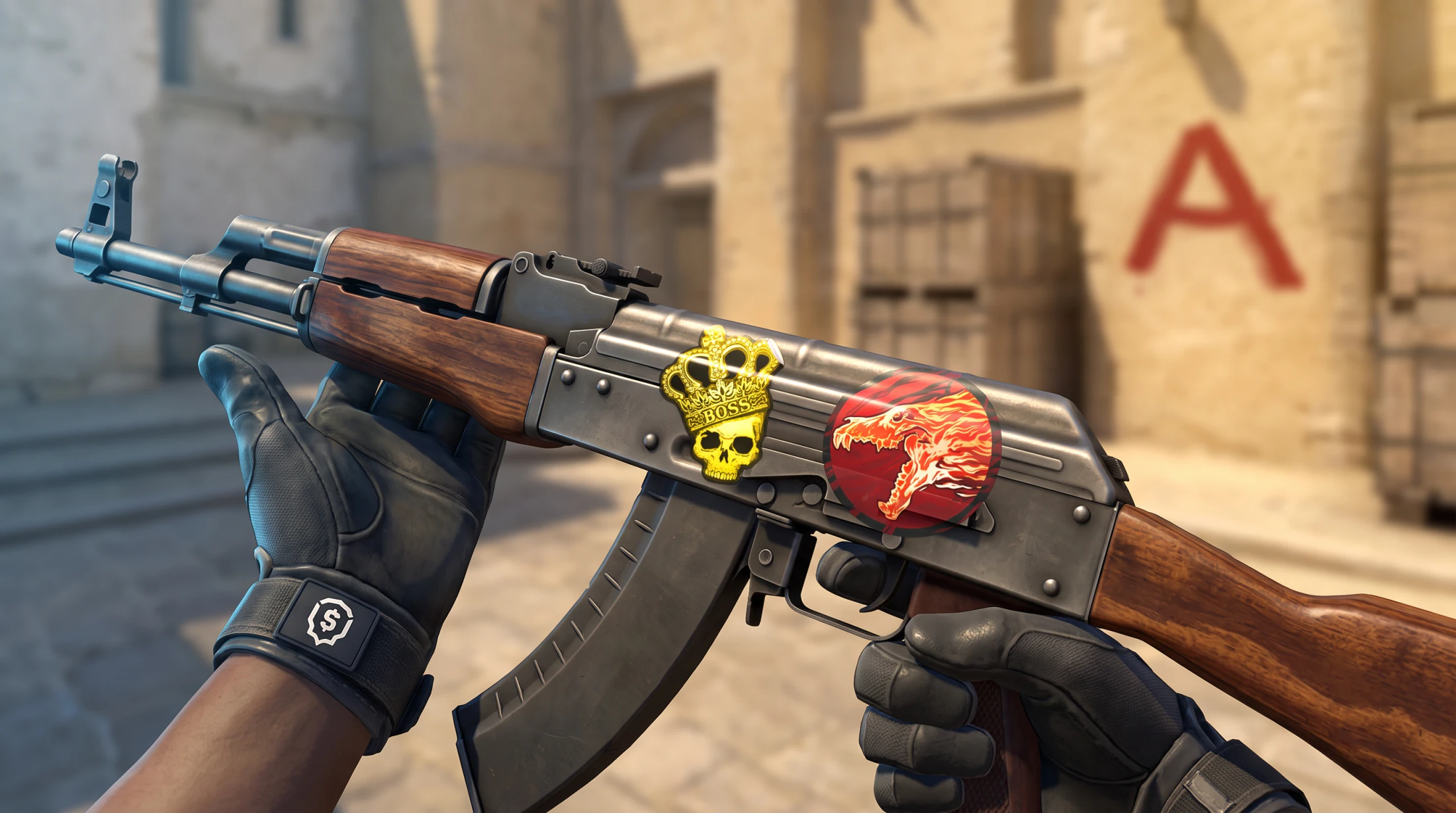
A skin's price is the price of its cheapest copy. Everything that makes a specific copy rare — a float at the edge of the range, stickers from closed tournaments, the pattern — gets paid for on top, because you cannot simply go buy a second one. The base sticker overpay math is in our stickers guide, patterns and phases in the knife hub. This article is the trader side: how to earn on it.
Craft tiers: from ordinary to one-of-one
Tier
What it is
Overpay logic
Ordinary
old stickers on unremarkable old skins
minimal: plenty of such crafts exist
New
old expensive stickers applied to new skins
above ordinary — applying Katowice to a new skin is costly upfront; the more such crafts, the cheaper each
Interesting
stickers amplifying an already beautiful skin
high — harmony sometimes pays more than age
Rare
one or two copies in the world
unpredictable: uniqueness pays when the weapon is popular; a one-of-one illiquid is still illiquid
A classification from trading practice. Existing craft counts are checked via float databases; our item cards show the stickers and float of every live listing
Float items: pricing what has no list price
A rare float is priced by the competitor method: open the item's live listings and see what the neighboring float cuts are listed at. Your price sits between the nearest competitor below and above, adjusted for liquidity: float items have a rare buyer, and overpricing means months of waiting. On CS2Price item cards every listing's float shows right in the list — competitor comparison takes a minute. Remember the rule from the skin deals guide: a price without liquidity is just a number.
The percentage matrix: how much to charge on a trade
Trade type
Your percent on top
Why
Your illiquid → their liquid
up to 2.5% — charge less than usual
the real win is shedding a frozen asset: liquid sells in days
Liquid → liquid
3–5%
both items move; your percent is the convenience fee
Your liquid → their illiquid
7%+
you absorb the freeze-and-drop risk of the illiquid — the percent is insurance
Rare stickered / top float / pattern
up to 30%
the buyer pays for what the market no longer has; works when you can flip fast
Practice benchmarks, August 2026. Baseline: any trade at minimum +5%, except when shedding your own illiquid
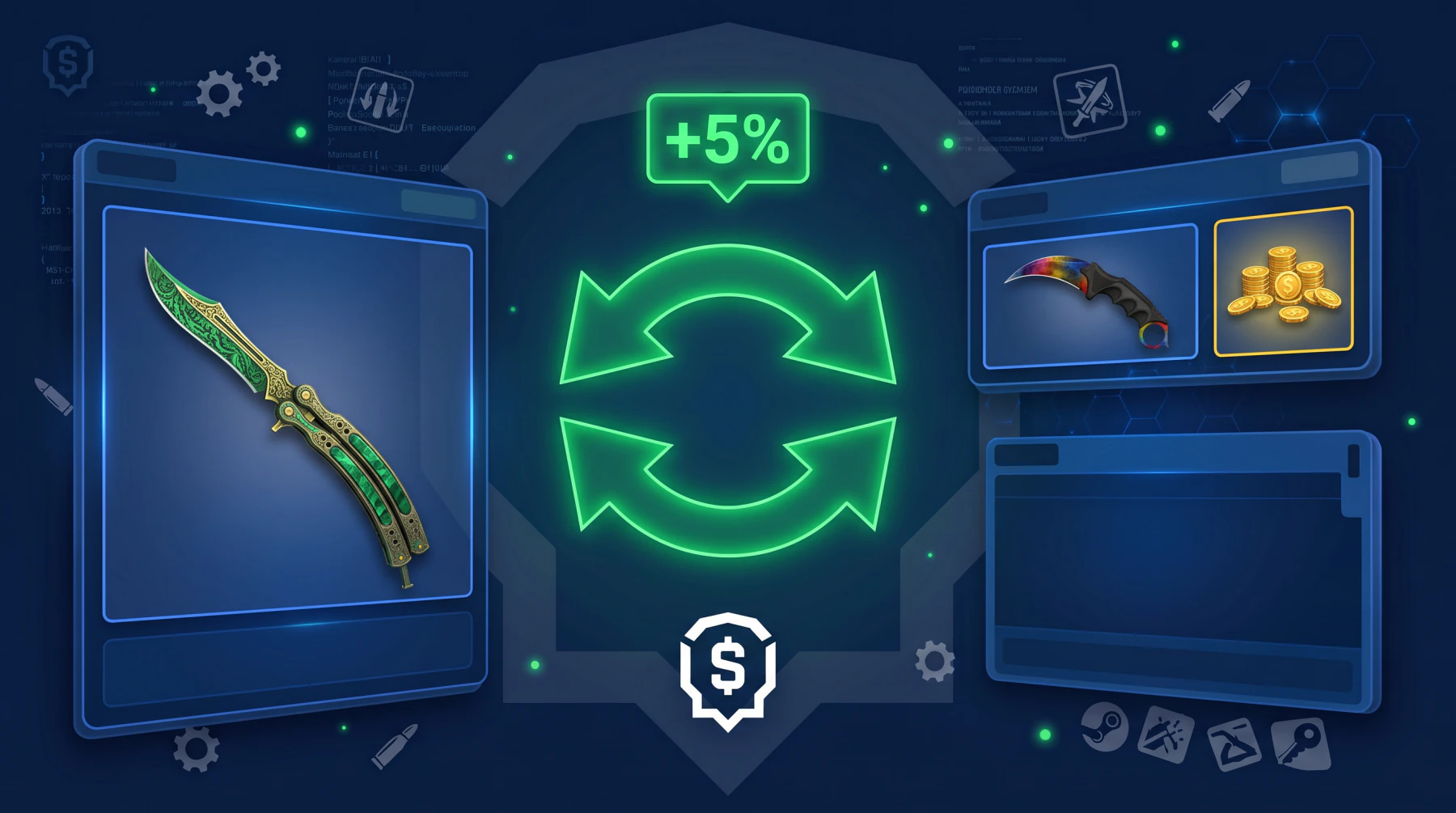
The base trade formula: your item leaves with at least a +5% premium — in money or in items
Why +5% is the baseline: the liquid you receive sells on external marketplaces at a 1–2% fee and cashes out, leaving 3–4% net for a cycle that took days, not weeks. Trades also speed rotation: your balance never sits in a sale's trade lock, items work immediately. Where to offload the received liquid best — in the marketplaces overview.
The trader's storefront: a profile that sells
Profile in English, no flags or national symbols — you are an international trader, and a counterparty's prejudice should not cost you deals
No earnings promises or "profitable trades" in the bio — it repels more than it attracts
Open inventory, trade link visible, Steam level and account age working for trust
The hot trade stock is mid-tier liquid knives and gloves: they get asked for most
Where to find counterparties
Steam community trade forums and flea threads — people there already want to trade
CS2 trading Discords and subreddits — post the trade link in dedicated threads, never as spam
Comments under traders' YouTube and stream content — live traffic already hunting for swaps
The storefront works passively: an open inventory with liquid knives and gloves brings offers without a single post
Trade Protection and scams: the red flags
The seven-day Trade Protection with rollback made classic theft less profitable, but scams did not die — they moved into substitution. Item swap: at the last second the trade window holds a similar skin with a worse float or scraped stickers — verify the item in the Steam mobile confirmation, not in chat. Fake middleman: a "guarantor" from someone's Discord is always a scam; legitimate middlemen do not exist in trading. Scraped stickers: a craft shown via inventory screenshot may be scratched — ask for an in-game inspect or the inspect link. And the master rule: anyone rushing the deal is working against you.
Before any trade, price both sides in money at live prices: the item card shows the marketplace row, real sales and — for crafts — each listing's stickers and float. Trading "by eye" is the most expensive way to learn the market price.
Trading FAQ
What percent should I charge on a trade?
Baseline — plus 5% on your item's value. Less (down to 2.5%) only when shedding your own illiquid; more (7 to 30%) when giving liquid for illiquid or a rare overpay item.
Does float affect a skin's price?
Far more than it seems: copies near the range edges are priced by the competitor method and sell at multiples. But the float buyer is rare — without liquidity the premium stays theoretical.
How do I verify a craft before trading?
An in-game or link inspect is the only way to see true sticker wear; existing craft counts are checked in float databases, and live listings' stickers and floats show on the item card.
What if I got scammed in a trade?
Within the Trade Protection window the deal can be rolled back via Steam support — which is exactly why scammers rush you to "sell before the rollback". Then report the profile. Prevention is cheaper: mobile confirmation and zero haste.
 CS2Price