CS2 Skin Trading in 2026: How to Start and What You Really Earn
CS2Price · 2026-08-22 · 5 min read · 239 views ·
CS2 skin trading is a real way to earn — but it starts not with "buy low, sell high" and rather with a sober look at risk. This is a guide without "50% a month for everyone" promises: where trading margin actually comes from, what bankroll to start with, what returns are normal at each tier, and which mistakes most often cost beginners their inventories.
Where trading margin comes from
Three sources, each covered in its own article. Cross-market spreads: one skin, ten prices — how to catch them, in the skin deals guide. Fees and money routes: who takes 2% and who takes 13%, where payouts eat profit — in the marketplaces overview. Time: the week-long trade lock and sale queues are the price you get paid a percent for tolerating. A trader earns not on skins but on market inefficiency across these three axes.
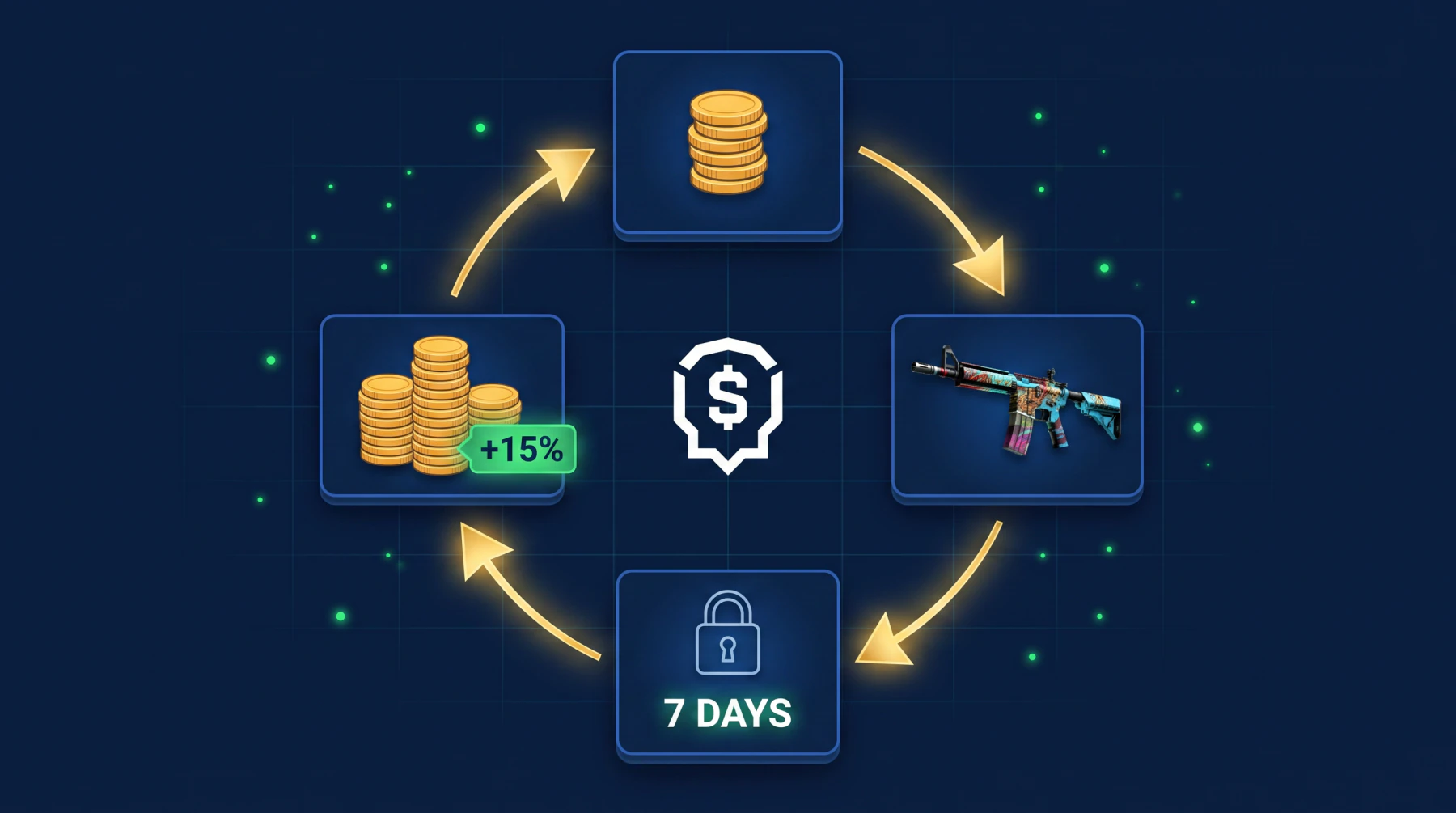
One trade cycle: buy below market, sit out the trade lock, sell and withdraw — the profit is locked in at the moment of purchase
The 2026 market: volatility as the norm
Today's trading is not 2020–2024 trading. Valve has learned to drop whole market segments with one update: knife crafts and souvenir crafting cut "the most stable assets" by 30–50% overnight, the seven-day Trade Protection stretched every cycle, and the market as a whole corrected by a third from its peak. Two conclusions. First: only spare money goes into trading — no loans, no last savings. Second: volatility is not just risk but income: drawdowns open the best entries, as covered in the skin deals guide.
Bankroll tiers and honest returns
Bankroll
Play style
Real monthly return
under $500
hobby mode: cheap float and sticker flips, fast Steam Market turnover
30–50% — big percent on tiny money
$500 — 5,000
Steam + external markets combo, first item pools
20–30%, a salary bonus for reasonable time
$5,000 — 30,000
liquid expensive pool, system and discipline
around 15%
$30,000+
a full-time job: pools, schedules, cross-market allocation
8–10% — comparable to good employment, minus the guarantees
Tiers from trading community practice, August 2026. The percentages assume active daily work — this is not passive income
The pattern is unpleasant but honest: the bigger the bankroll, the lower the percent — an expensive liquid pool turns over slower. Start with a sum you can afford to freeze or lose, and reinvest early profits: experienced traders keep 70–80% of earnings in rotation. The inventory analyzer on our main page tells you how much is already sitting in your backpack — a ready starting point.
Risk management: three rules
No more than 15% of the bankroll in one item: a single knife is not a portfolio, it is a lottery ticket
Spare money only: this market can drop by a third, and your horizon must allow sitting out a drawdown in liquid illiquid
Never keep the whole balance on one marketplace: markets are tied to your Steam account, and a block on any link freezes everything — spread it out
Your item pool and routine: a trader's day
Over time every trader builds a pool — a set of items they know by heart: what they really sell for, how fast, on which marketplace. No ready-made pool exists; it comes from monitoring: watchlist items, track what they actually sell for, hunt patterns. The day itself is simple: morning — check sales, accept or outbid offers; afternoon — scan deal feeds and fresh listings in your pool; evening — reprice what sits unsold, by the real-sales book, not by hope.
Five mistakes that drain inventories
FOMO panic: selling in the first second of a dip means dumping with the crowd at the worst price; those are exactly the hours when veterans buy. Buying the hype peak: a new case or craft mechanic spikes — and settles within a week. Uncounted fees — a classic from practice: a trader was offered $1,330 for a knife bought at $1,130 — "+200 on paper"; after conversions and payout fees almost nothing was left. Count the full money route before the deal — the how is in the marketplaces and wallet funding guides. Ignoring liquidity: a skin without buyers is frozen bankroll — read real sales on the item card. Trading without numbers: a gut call against the full cross-market price row loses every time.
Loading price history…
The people's AK-47 Redline: even the most liquid skins swing tens of percent — this is the trader's working field
Trading vs investing: what is left of buy-and-hold
"Buy cases and forget" worked while case supply was capped by farms and drops — ban waves and new Valve mechanics made passive bets riskier: today's "stable asset" can get a re-release or a new supply source tomorrow. Active short-cycle trading controls risk with time: you do not marry an asset, you rotate it. If you still want investment bets — make them a small slice of the bankroll and only in what you understand better than the market: say, knives or collectible stickers, where supply genuinely shrinks.
The mandatory disclaimer: skins are a volatile, unregulated asset. No return is guaranteed, a one-third market drawdown has already happened, and an account ban takes the whole inventory with it. Trade with sums you can lose calmly.
Getting-started FAQ
How much do skin traders really make?
On a small bankroll — 30–50% a month with daily work, though little in absolute money. The percent falls as the bankroll grows: 15% mid-tier, 8–10% high-tier. It is active work, not passive income.
Can I start with $100?
Yes — as a hobby of fast-flipping cheap float and sticker items on the Community Market. The goal at this stage is not earning but learning: run a few cycles and reinvest everything.
Is it legal?
Trading skins through official Steam mechanics and marketplace intermediaries is legal. Two caveats: Valve's rules prohibit selling items for real money outside Steam (the marketplaces carry that risk), and substantial regular income may be taxable in your jurisdiction — this is not tax advice.
Where do I start today?
Run your inventory through the analyzer on our main page to learn your actual bankroll. Then read the marketplaces overview and the skin deals guide, pick a mode on the deals page, and run your first small cycle.
Every price behind the links here is live — make decisions on those, not on chat screenshots. Next in the series: trades, floats and stickers — the level where margins are higher and mistakes cost more.
 CS2Price